Example Library
Info Info
Easy
45 min
5 stops

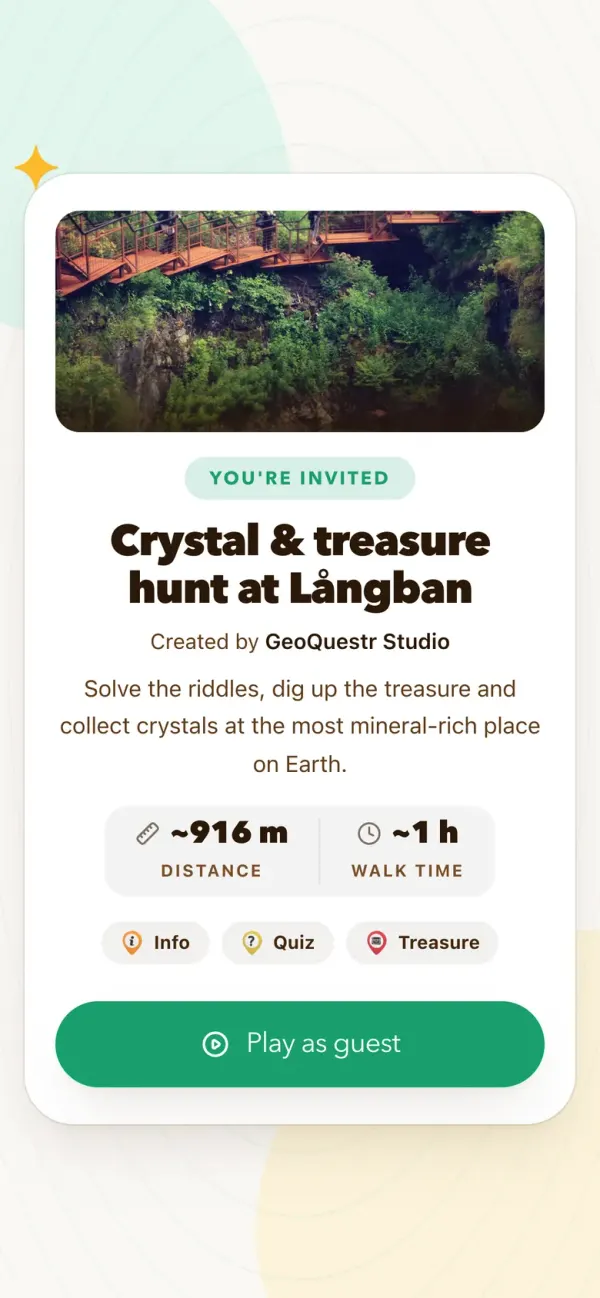
Self-guided Nature Tour

Follow this educational trail through scenic landscapes and learn about local flora and fauna.

Example Layout

How You Could Design Your Experience

Here's an example of how the missions can be designed - customize your experience to fit your location and theme.

How this Quest works

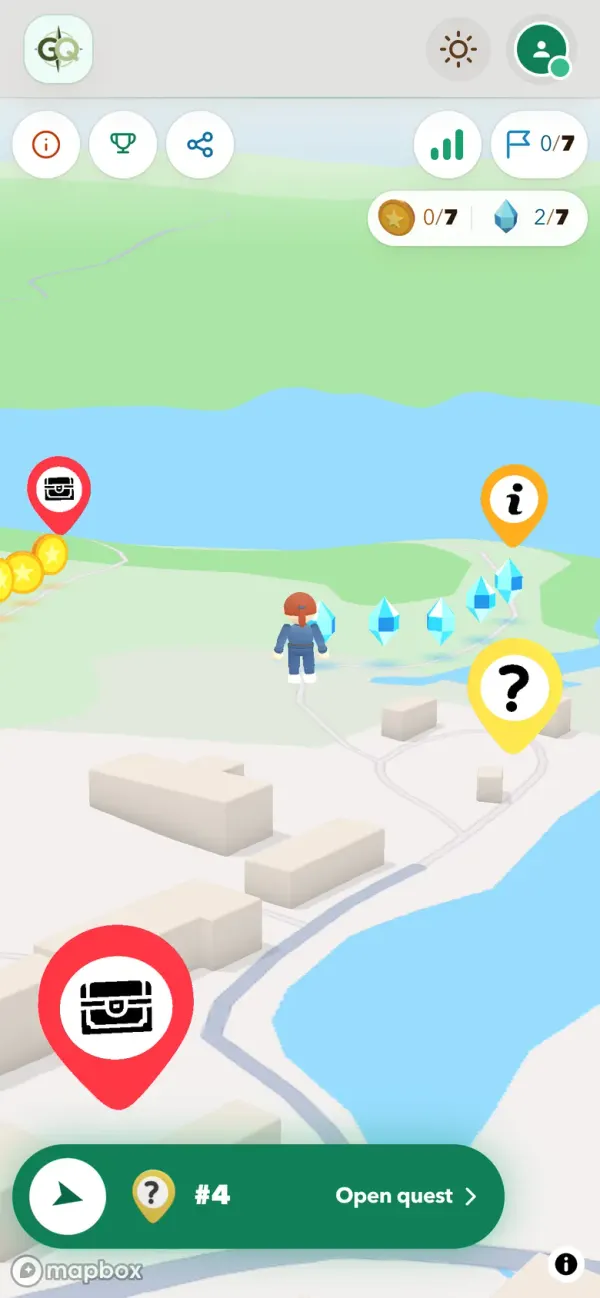
In an info quest, you share stories, facts, and descriptions at each stop. Participants read the information and explore at their own pace. You can also add images or YouTube videos.


Stop 1 β€” The Trailhead

Give participants an introduction and prepare them for what they're about to experience. The first stop should orient and spark curiosity.

Title: Welcome to the Nature Trail

Description: You're standing at the entrance to one of the area's finest green spaces. During this walk, you'll learn about the trees, plants, and animals that live here. Keep your eyes open and listen carefully β€” nature has a lot to say. The ecosystem here is a mix of deciduous forest and wetland, making it unusually rich in species.


Stop 2 β€” The Old Tree

Remarkable trees capture attention immediately. Use this stop to share fascinating facts about the tree's role in the ecosystem.

Title: The Ancient Oak

Description: The oak in front of you is estimated to be 300 years old. You can estimate a tree's age by measuring its trunk circumference β€” every 2.5 centimeters corresponds to roughly one year. Over 500 species of insects, birds, and fungi can live in and around a single oak. Look at the bark β€” can you see lichens and moss? Those are signs of clean air.


Stop 3 β€” The Water's Edge

Places where water meets land can be a great stop for an interesting info point.

Title: Where the Stream Meets the Forest

Description: At this place where the stream meets the forest edge, a great variety of species thrive. Look for dragonflies, frogs, and tracks in the mud. The reeds you see act as a natural water treatment plant that filters out pollutants.


Stop 4 β€” The Meadow

Open areas provide a natural contrast to the forest. Share information about pollinators, wildflowers, and why meadows need management.

Title: The Wildflower Meadow

Description: This meadow is mowed once a year to preserve its species richness. Without management, shrubs and trees would take over within 10 to 15 years. Look for daisies, bluebells, and red clover. The bees and butterflies you see are essential pollinators β€” without them, a third of our food would disappear.


Stop 5 β€” The Listening Post

Finish with a quiet, reflective spot. Sound is an underrated way to experience nature.

Title: Stop and Listen

Description: Sit on the bench and close your eyes for two minutes. Listen. The high, repeating note is a blackbird. The quick, scratchy call is likely a nuthatch. And the rhythmic tapping? That's a woodpecker searching for insects. Sound reveals an ecosystem's health β€” the more species you hear, the healthier the forest.

Get Creative

Create an Experience Like This in Your City

Use this template as inspiration and create your own version with locations you know and love.

Browse More Examples